

Why Fast Websites Earn More: The Speed-Revenue Connection
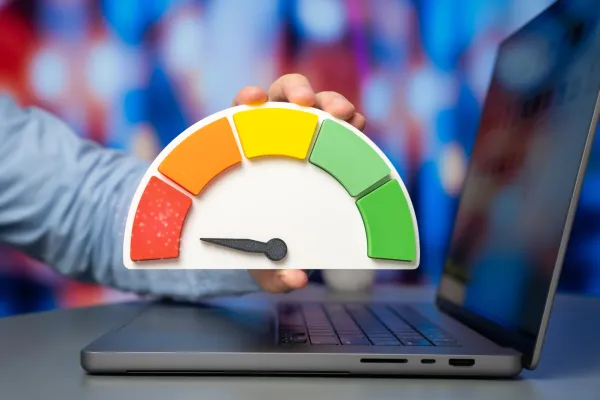
Imagine spending months building the perfect online store — stunning design, compelling products, competitive pricing. Yet conversions stubbornly underperform. The culprit might not be your offer. It might be how long your page takes to load. Research consistently confirms that website speed is not a technical afterthought; it is a direct driver of revenue, customer retention, and search visibility.
This article breaks down the measurable relationship between page load time and business performance, backed by real-world data from industry leaders. It also provides actionable steps to start closing the speed gap today.
The Cost of a One-Second Delay: More Than You Think
The numbers are striking. Google's research shows that 53% of mobile users abandon a site that takes longer than 3 seconds to load. Amazon's internal data found that every 100-millisecond increase in load time caused a 1% drop in sales. Walmart reported a 2% improvement in conversion rates for every one-second reduction in load time.
Translate this to a mid-sized e-commerce operation generating $500,000 per month: a single second of improvement can unlock tens of thousands in additional monthly revenue. Speed is not a UX nicety — it is a revenue lever with a measurable return on investment.
"A one-second delay in page load time leads to a 16% decrease in customer satisfaction, an 11% drop in page views, and a 7% reduction in conversions." — Akamai Technologies
Speed as a Google Ranking Signal: Core Web Vitals Explained
Since 2021, Google has officially incorporated Core Web Vitals into its ranking algorithm. These three metrics measure real-world user experience and directly influence where a site appears in search results:
The Three Metrics That Matter
LCP (Largest Contentful Paint): Measures how long it takes for the largest visible element — typically a hero image or headline — to load. Google's threshold: under 2.5 seconds.
FID (First Input Delay): Tracks the delay between a user's first interaction (a click or tap) and the browser's response. Target: under 100 milliseconds.
CLS (Cumulative Layout Shift): Measures how much page elements shift unexpectedly during loading. A low CLS score (under 0.1) indicates visual stability.
Failing these benchmarks can suppress organic rankings regardless of content quality. For paid campaigns, slow landing pages drive up cost-per-click by lowering Quality Scores. In both cases, speed directly determines how much visibility and traffic a site captures.
User Behavior and the Psychology of Waiting
Human patience online is finite — and shrinking. Nielsen Norman Group research indicates that users form a judgment about a webpage within the first 10 to 20 seconds. If a significant portion of that window is spent watching a progress bar, the content never gets a fair chance.
Mobile Users Are the Most Impatient Segment
Mobile now accounts for more than 60% of global web traffic (Statista, 2024). Yet mobile pages typically load slower than desktop equivalents due to network variability and resource constraints. Users arriving from social media ads — accustomed to instantaneous in-app transitions — are especially unforgiving of delays. A 3-second load time on a paid ad landing page means a significant share of that ad spend generates zero return.
Cart Abandonment and the Speed Factor
According to Baymard Institute, the average online cart abandonment rate sits above 70%. Among the reasons cited, slow page performance ranks consistently in the top contributing factors, particularly at the checkout stage. Every fraction of a second shaved off the payment flow reduces the chance that a nearly completed purchase falls apart.
The Conversion Math: Turning Speed Into Revenue
Consider a straightforward scenario:
- Monthly visitors: 100,000
- Current conversion rate: 2% (2,000 sales)
- Average order value: $75
- Monthly revenue: $150,000
A 2-second load time improvement that increases the conversion rate by just 0.5 percentage points — a conservative estimate based on published research — produces:
- New monthly conversions: 2,500
- Additional monthly revenue: $37,500
- Annual revenue uplift: $450,000
The cost of a thorough speed optimization engagement is typically a fraction of this figure. Few digital investments offer a comparable return with as little ongoing overhead.
Practical Steps to Improve Website Speed
Speed optimization does not require a complete rebuild. The following measures can realistically improve load times by 40 to 60 percent on most sites:
- Compress and convert images to WebP: WebP files are 25-34% smaller than JPEG or PNG equivalents without visible quality loss.
- Implement lazy loading: Defer images and videos below the fold until they enter the viewport.
- Deploy a CDN: Serve content from geographically distributed servers to reduce latency for global audiences.
- Enable browser caching: Instruct browsers to store static assets locally so repeat visitors experience faster loads.
- Upgrade to HTTP/2 or HTTP/3: These protocols allow parallel resource loading, significantly reducing round-trip times.
- Minify CSS, JavaScript, and HTML: Strip unnecessary whitespace, comments, and redundant code from files.
- Eliminate render-blocking resources: Load non-critical JavaScript asynchronously or with the defer attribute.
- Upgrade hosting infrastructure: Moving from shared hosting to VPS or cloud-based solutions typically delivers immediate gains.
- Audit and remove unused plugins: On platforms like WordPress, plugin bloat is one of the most common causes of poor performance.
- Run regular performance audits: Tools like Google PageSpeed Insights, GTmetrix, and WebPageTest identify regressions before they affect revenue.
The Competitive Landscape: Industry Leaders Are Already Ahead
According to HTTP Archive's 2024 Web Almanac, Fortune 500 companies have improved average load times by 31% over the past three years. Shopify, ASOS, and other major e-commerce platforms have made site performance a top engineering priority. The pattern is consistent: brands that invest in speed grow faster, retain more customers, and outcompete on search.
Smaller businesses that dismiss speed optimization as a large-enterprise concern are leaving meaningful revenue on the table — and ceding ground to competitors who understand the economics of performance.
Conclusion: Speed Is a Business Decision, Not a Technical Detail
The evidence is clear and consistent across industries, geographies, and company sizes: faster websites convert better, rank higher, and retain customers more effectively. Website speed is not a line item to be deferred — it is an investment with one of the highest and most predictable returns in digital business.
The path forward starts with measurement. Enter any URL into Google PageSpeed Insights and benchmark the current score. A score below 90 on mobile is a signal that revenue is being left on the table. Share the report with a development team or digital agency, prioritize the highest-impact fixes, and build a speed roadmap with clear milestones.
The best time to optimize was yesterday. The second-best time is today. Start with one change this week and measure the impact — the data will make the case for everything that follows.
Similar Topics

Why Isn't My Website Showing Up on Google? 7 Common Mistakes
6 min read

What Determines Corporate Web Design Pricing?
6 min read

Why Your Team Urgently Needs a Project Management Tool Once It Exceeds 5 People
7 min read