

If You're Not Online, You're Losing: The Hidden Cost of Businesses Without a Website

In Today's World, a Digital Presence Is Not a Choice — It's a Necessity
Before buying a product, consumers search Google. Before choosing a restaurant, they check reviews. Before hiring a service provider, they visit that company's website. This is the standard behavior of the modern consumer. But what happens when the business they're looking for doesn't have a website?
The answer is straightforward and costly: that business loses the customer to a competitor. And this happens silently, every day, every hour.
"A business without a website is like a store without a sign. It doesn't matter how good your service is — if no one can find you, no one comes."
The Numbers Don't Lie: How Consumers Search Today
Research into consumer behavior tells a striking story:
- 97% of consumers use the internet to find a local business.
- 88% of mobile searches result in a call or store visit within 24 hours.
- 75% of consumers judge a company's credibility based on its website design.
- Businesses that don't appear on the first Google results page capture less than 1% of available traffic.
These figures make it clear: businesses without a website aren't just "invisible" — they are actively losing customers, trust, and revenue.
The Anatomy of the Invisible Cost: 6 Major Consequences of Having No Website
1. Lost Customers and Direct Revenue Damage
When a user searches "plumber in London" or "bakery near me," businesses without a website simply don't appear. This isn't just a traffic problem — it's a direct revenue problem.
Consider this: if a competitor captures just 3 new customers per day from these searches at an average order value of £50, that's £4,500 per month in revenue you're leaving on the table. Over a year, this figure becomes impossible to ignore.
2. A Crisis of Trust: The Collapse of Perceived Professionalism
In the digital era, a consumer's first impression of your business is formed online. A business without a website sends a subtle but damaging message: "I'm not serious enough about my business to be found."
Research from Stanford University shows that 75% of people judge a company's credibility directly from its website. A business with no website doesn't even get a seat at the credibility table.
3. Market Share Gifted to Competitors
While you operate without a digital footprint, your competitors grow stronger every day through SEO, blog content, Google Business Profiles, and online reviews. They accumulate organic traffic and audience trust, while you silently hand over your share of the market without even realizing it.
"Digital competition is like a chess game you lose without knowing you're playing. Your competitor makes moves every day, while you're not even seated at the board."
4. A 24/7 Shop That's Always Closed
Your physical store may be open from 9 AM to 6 PM. But consumers research products and services heavily in the evenings and at night. A competitor with a website captures leads, answers questions, and takes orders while you sleep. A website is your business's digital sales representative — working without breaks, 7 days a week, 365 days a year.
5. The Limits of Google Maps Alone
Some business owners think, "I have a Google Business Profile — why do I need a website?" This logic is understandable, but incomplete. A Google Business Profile brings a customer to your door. A website convinces them to walk through it — with detailed service information, product catalogs, testimonials, and rich content.
Moreover, Google gives ranking preference to businesses with websites in local search results. Without a website, your Google Business Profile ranking is actively suppressed.
6. Zero Data, Zero Insight
Businesses with websites can track where visitors come from, which products they browse, where they drop off in the purchase journey, and how they behave across the funnel. This data drives smarter marketing, better ad spend, and an improved customer experience. Without a website, you're operating blindly — making decisions without evidence.
Is Social Media Enough? The Biggest Misconception in Digital Business
Many business owners believe that an Instagram or Facebook page can substitute for a website. This is, unfortunately, a costly strategic error.
- Algorithm dependency: When social platforms change their algorithms — and they do, frequently — your reach can collapse overnight. Your website is entirely within your control.
- Search engine indexing: Google cannot index social media profiles as effectively as websites. Your organic search visibility without a website is severely limited.
- Perceived professionalism: A business with only a social media page signals impermanence and informality to potential customers.
- Platform risk: If your account is restricted or removed for any reason, you lose your entire digital presence in an instant.
Website Investment: Cost or Profit?
The perceived cost of building a website is often cited as the reason businesses delay going digital. But when viewed correctly, a website is not an expense — it's an investment.
A basic professional website can cost a few hundred dollars per year, including hosting and domain fees. A single customer acquired through that website almost always exceeds that cost many times over.
- A well-designed website generates an average conversion rate increase of 30–50%.
- An SEO-optimized site attracts organic traffic without ongoing ad spend.
- E-commerce functionality lets businesses transcend geographic boundaries and serve national or global markets.
"Every dollar you invest in your website is a dollar that works for you long after you've spent it. Not having a website is a loss you don't feel today but will pay for tomorrow."
Which Businesses Need a Website Most Urgently?
The short answer: all of them. But some industries feel the pressure most acutely:
- Local service providers (plumbers, electricians, repairers): In emergencies, people turn to Google instantly.
- Restaurants and cafés: Menus, reservations, and location are website essentials.
- Health and beauty services: An appointment system and testimonials build trust fast.
- Retail and e-commerce: Without an online sales channel, market share erodes rapidly.
- Professional services (lawyers, consultants, accountants): Expertise and credibility are proven online.
What Makes a High-Performing Website?
Having a website isn't enough — it needs to be effective, conversion-optimized, and search-engine-friendly:
- Fast loading speed: Pages taking more than 3 seconds to load lose 53% of visitors.
- Mobile responsiveness: More than half of all web traffic now comes from mobile devices.
- Clear contact options: Phone number, WhatsApp button, contact form.
- SEO fundamentals: Title tags, meta descriptions, schema markup.
- Social proof: Customer reviews, success stories, case studies.
- Clear calls to action (CTAs): "Call Now", "Get a Quote", "Book an Appointment".
Delaying Digital Transformation: Today's Decision, Tomorrow's Price
The greatest cost of postponing digitalization doesn't show up today — it compounds over time. While competitors grow their digital footprint, businesses without websites lose more market share each month, reach fewer potential customers, and appear less credible to anyone who looks for them.
Technology has made web presence more accessible than ever. Building a professional website no longer requires a large budget or technical expertise. What it requires is the decision to act — and the understanding that the digital world is where your customers already are.
If you're not online, you're losing. That's not the question. The question is: How much longer will you keep losing?
Conclusion: Digital Presence Is the Smartest Investment in Your Business's Future
A website is no longer the privilege of large corporations — it's the baseline requirement for every business at every scale. Regardless of your industry, your city, or your size, digital visibility is the most powerful competitive advantage separating thriving businesses from stagnant ones.
Your customers are searching for you online right now. Being findable is your most powerful marketing strategy.
Similar Topics
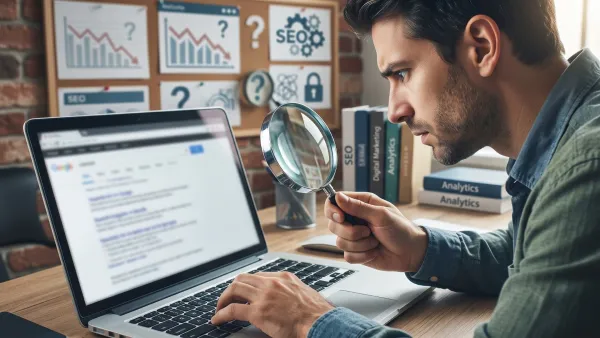
Why Isn't My Website Showing Up on Google? 7 Common Mistakes
6 min read

What Determines Corporate Web Design Pricing?
6 min read

Why Your Team Urgently Needs a Project Management Tool Once It Exceeds 5 People
7 min read